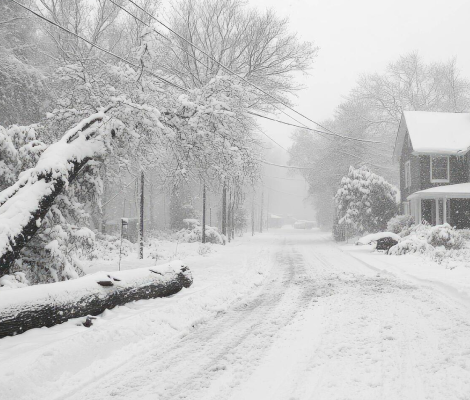
When temperatures plummet below the effective range of chemical de-icers, when ice is too thick to melt quickly, or when environmental concerns limit salt usage, sanding becomes your most reliable defense against slip-and-fall accidents. At Prime Landscaping and Snow Removal LLC, our professional sanding and traction improvement services provide immediate, effective grip on icy surfaces across Utah’s most challenging winter conditions.
Why Sanding is Essential for Winter Safety
Sanding is not a secondary option, it is a critical component of comprehensive ice management. Here is why professional sanding belongs in every winter safety plan:
- Works in Extreme Cold: Unlike salt, which loses effectiveness below 20°F, sand provides traction regardless of temperature. In Utah’s high-altitude sub-zero nights, sand is often the only viable option.
- Immediate Results: Sand creates instant friction the moment it hits the surface. There is no waiting for chemical reactions or melting, pedestrians and vehicles gain traction immediately.
- Environmental Safety: Sand is inert, non-corrosive, and harmless to vegetation, pets, groundwater, and concrete. Properties near streams, wetlands, or sensitive ecosystems benefit from sand as a chemical-free alternative.
- Cost Efficiency: Sand is significantly less expensive than premium de-icers like calcium chloride or CMA. For large properties with extensive hardscape, sanding provides budget-friendly safety.
- Thick Ice Penetration: When ice accumulations exceed half an inch, chemicals struggle to reach the pavement surface. Sand embeds into the ice layer, creating traction even when melting is impossible.
- Slip-and-Fall Prevention: The majority of winter liability claims occur on surfaces that appear clear but retain invisible ice patches. Sand provides visible, physical traction that alerts pedestrians to hazardous zones.
- Vehicle Control: On sloped driveways, parking ramps, and loading docks, sand prevents vehicles from sliding during acceleration, braking, and turning, reducing collision and property damage risks.
Our Sanding & Traction Improvement Services
Commercial Parking Lot Sanding
Large-scale sand and grit application for retail centers, office complexes, and industrial properties. Calibrated spreader trucks ensure uniform coverage across expansive asphalt and concrete surfaces.
Walkway & Sidewalk Gritting
Precision sand application on pedestrian paths, entryways, stairs, and ramps. We use fine-grade grit that provides traction without creating a messy, difficult-to-clean residue.
Residential Driveway Sanding
Targeted traction improvement for steep driveways, shaded approaches, and homes in high-altitude areas where chemical de-icers fail. Perfect for rural and mountain properties.
ADA Ramp & Access Sanding
Priority sanding of wheelchair ramps, curb cuts, and accessible routes. We use specialized fine aggregate that provides grip without interfering with mobility device operation.
Loading Dock & Ramp Treatment
Heavy-duty sand and cinder application for freight docks, delivery ramps, and vehicle access points where truck traction is critical for safe loading and unloading operations.
Combined Salt & Sand Blends
Pre-mixed salt-sand combinations that deliver both melting power and immediate traction. Ideal for moderate temperatures where both chemical and physical ice control are needed.
Sanding Materials We Use
Prime Landscaping selects sanding materials based on application surface, temperature, traffic type, and environmental sensitivity:
- Clean Washed Sand: Fine to medium grain silica sand, screened and washed to remove clay and organic matter. Provides excellent traction without clumping or leaving muddy residue. Ideal for walkways and entryways.
- Angular Grit Aggregate: Crushed granite or limestone with sharp, angular edges that bite into ice more aggressively than rounded sand particles. Used on steep slopes and high-traffic vehicle areas.
- Cinders (Fine Ash Aggregate): Lightweight, porous volcanic cinders that absorb moisture and embed deeply into ice surfaces. Dark color absorbs solar heat, providing mild passive melting. Excellent for rural and mountain properties.
- Calcined Clay (Kitty Litter Grade): Highly absorbent calcined clay particles that soak up surface moisture and provide long-lasting traction. Biodegradable and safe for all surfaces including pavers and natural stone.
- Salt-Sand Mix (50/50 or 70/30): Pre-blended mixtures that combine the melting power of rock salt with the immediate traction of sand. The salt prevents the sand from freezing into the ice, extending effectiveness through multiple freeze-thaw cycles.
- Calcium Chloride-Treated Sand: Sand pre-coated with calcium chloride for enhanced performance in extreme cold. The chemical coating prevents the sand from freezing into solid ice while providing exothermic melting action.
- Recycled Abrasive Grit: Crushed recycled glass or ceramic material with exceptional hardness and angular profile. Environmentally sustainable option that provides superior traction and does not degrade into sediment.
Our Professional Sanding Process
At Prime Landscaping, sanding is not simply throwing grit on the ground. Our systematic approach maximizes traction while minimizing waste, mess, and environmental impact:
- Surface Condition Assessment: Before application, we evaluate ice thickness, temperature, surface material, and expected traffic. This determines the optimal grit size, application rate, and material type.
- Pre-Application Clearing: When possible, we remove loose snow and slush before sanding. Sand works best when it contacts the ice surface directly rather than sitting on top of snowpack.
- Calibrated Application: Our spreader trucks and walk-behind units apply material at precise rates measured in pounds per square foot. Over-application creates cleanup headaches; under-application fails to provide adequate traction.
- Targeted Zone Treatment: High-risk areas, stairs, ramps, shaded zones, and high-traffic entrances, receive heavier application. Low-risk areas receive lighter treatment to balance safety with material efficiency.
- Embedding Technique: On thick ice, we use mechanical methods or chemical pre-treatment to create surface roughness before sand application. This ensures grit embeds rather than sliding off smooth ice.
- Post-Storm Refresh: Sand gets displaced by traffic, wind, and subsequent plowing. We schedule follow-up applications during multi-day storm events and freeze-thaw cycles to maintain consistent traction.
- Spring Cleanup: Once winter ends, we offer complete sand and grit removal services to prevent drainage clogs, staining, and accumulation in landscape beds and storm drains.
Sanding vs. Salting: When to Use Each
Understanding when to sand and when to salt is critical for effective winter management. Here is how we guide our clients:
- Use Sand When: Temperatures drop below 15°F, ice is thicker than half an inch, environmental restrictions prohibit chlorides, surfaces are porous or delicate (pavers, natural stone), or immediate traction is needed without waiting for melting.
- Use Salt When: Temperatures are between 15°F and 32°F, ice is thin and freshly formed, rapid melting is desired, surfaces are durable concrete or asphalt, and environmental conditions allow chloride application.
- Combine Both When: Moderate temperatures with heavy traffic, post-plowing residual ice treatment, freeze-thaw cycle management, or when budget constraints require maximizing effectiveness of both materials.
- Sand Alone for: Steep rural driveways, properties near water sources, organic farms, pet-friendly facilities, and locations where salt residue creates indoor tracking problems.
- Salt Alone for: Urban commercial centers with high pedestrian volume, areas requiring ADA compliance (sand can impede wheelchairs), and situations where complete ice elimination, not just traction, is required.
- Hybrid Approach for: Most Utah commercial properties benefit from a hybrid strategy: anti-icing brine before storms, salt after light accumulation, and sand during extreme cold events or on secondary paths where melting is impractical.
Areas We Serve Across Utah
Prime Landscaping and Snow Removal LLC provides sanding and traction improvement services throughout the Wasatch Front, Wasatch Back, and surrounding mountain communities:
- Park City
- Salt Lake City
- Kamas
- Heber City
- Midway
- Cottonwood Heights
- Sandy
- White City
- Oakley
- Summit County
- Salt Lake County
- Wasatch County
From the steep, winding mountain driveways of Park City where temperatures regularly drop below zero, to the urban commercial corridors of Salt Lake City with heavy pedestrian traffic, our crews understand the unique traction challenges of Utah’s diverse winter landscape. We maintain diverse material inventory and specialized spreading equipment calibrated for everything from fine walkway grit to heavy cinder application on rural roads.
Why Choose Prime Landscaping for Sanding & Traction?
- 30+ Years of Mountain Winter Experience: Our sanding specialists understand Utah’s extreme cold, high winds, and rapid freeze-thaw cycles that make traction management uniquely challenging.
- Calibrated Application Equipment: GPS-controlled spreader trucks and precision walk-behind units apply exactly the right amount of material, no wasteful over-application, no dangerous under-application.
- Diverse Material Inventory: We stock seven different sanding materials, allowing us to match the perfect grit to your surface, temperature, and environmental requirements.
- 24/7/365 Storm Response: Our operations center monitors conditions continuously. Sanding crews deploy the moment ice becomes hazardous, day or night.
- Integrated Winter Management: Sanding coordinates seamlessly with our plowing, shoveling, and de-icing services for comprehensive, efficient ice control.
- Spring Cleanup Included: We do not leave sand behind to clog drains and stain concrete. Our seasonal contracts include complete post-winter material removal.
- Transparent Contracts: Per-application, seasonal fixed-rate, and hybrid options with clear trigger conditions, material specifications, and response protocols.
Frequently Asked Questions
Does sand actually melt ice?
No, sand does not melt ice chemically. It works purely through physical traction, creating friction between footwear or tires and the icy surface. Dark cinders absorb minimal solar heat and may provide slight passive melting, but sand’s primary function is grip, not thawing.
Will sand damage my concrete or pavers?
Sand is inert and non-corrosive, making it safer for all hardscape materials than any chemical de-icer. However, angular grit can cause minor surface abrasion over many seasons. We use rounded, washed sand for delicate surfaces and angular grit only where maximum traction is critical.
How often should sand be reapplied?
Sand displaces quickly under foot and vehicle traffic, wind, and subsequent plowing. High-traffic areas may need reapplication every 2–4 hours during active storms. Low-traffic zones typically hold for 24–48 hours. Our service contracts include scheduled refresh rounds based on your property’s traffic patterns.
Is sand safe for pets and landscaping?
Yes. Clean washed sand is completely safe for pets, plants, and groundwater. Unlike salt, sand does not burn paw pads, kill vegetation, or contaminate water sources. It is the preferred traction solution for properties with dogs, gardens, or proximity to natural water features.
Do you remove the sand in spring?
Yes. Accumulated sand can clog storm drains, stain concrete, and smother landscape beds. Our seasonal contracts include spring cleanup with power sweeping, pressure washing, and landscape bed restoration. Standalone spring sand removal services are also available.