Slow to Grow, Quick to Lose
Tree Service in Utah and the Wasatch Front
We’re a Park City design studio, and our tree crews work across Summit, Wasatch, and Salt Lake counties — care shaped by more than two decades of working with the trees on Wasatch Front properties, where altitude, snow load, and fire season all decide what a tree needs.
A mature tree is the slowest thing on a property to grow and the quickest to lose. It’s part of what makes a place feel settled, and part of what holds the value of the lot. The wrong cut can’t be taken back, and a tree that comes down in a storm or a fire it should have been thinned against doesn’t grow back in a season.
Most homeowners call a chainsaw and a pickup when a branch comes down. That’s not what a mature property needs. It needs a team that reads the tree before it touches it — and treats the trees the way it treats everything else it’s accountable for.
Tree Removal and Site Clearing
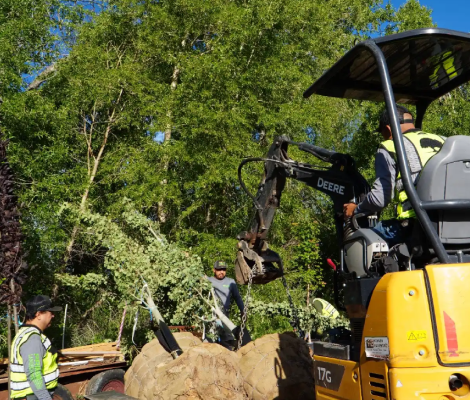
Some trees have to come down — because they’re dead, hazardous, in the way of a build, or lost to a storm. Removal is the part of tree work with the least room for error, and we handle it in-house.

Full and sectional removal
Including high-risk trees and tight-access sites near homes and structures
Hazard and dead tree removal
Before a compromised tree decides the timing for you
Storm-damage removal and emergency cleanup
Through the heavy-snow and high-wind seasons
Stump grinding
Below grade, with the surface roots cleaned up
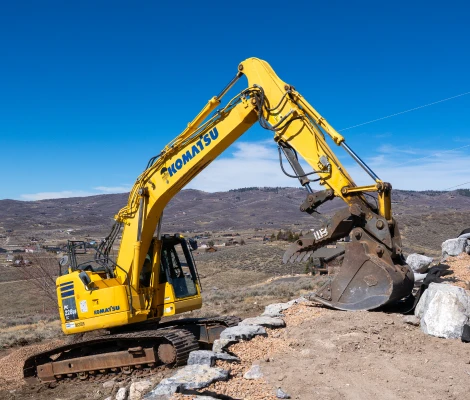
Lot and land clearing
For new construction, redesign, or defensible space
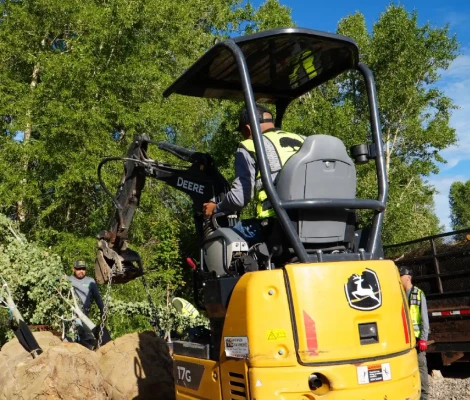
Tree transplanting and large-tree relocation
Moving a tree rather than losing it
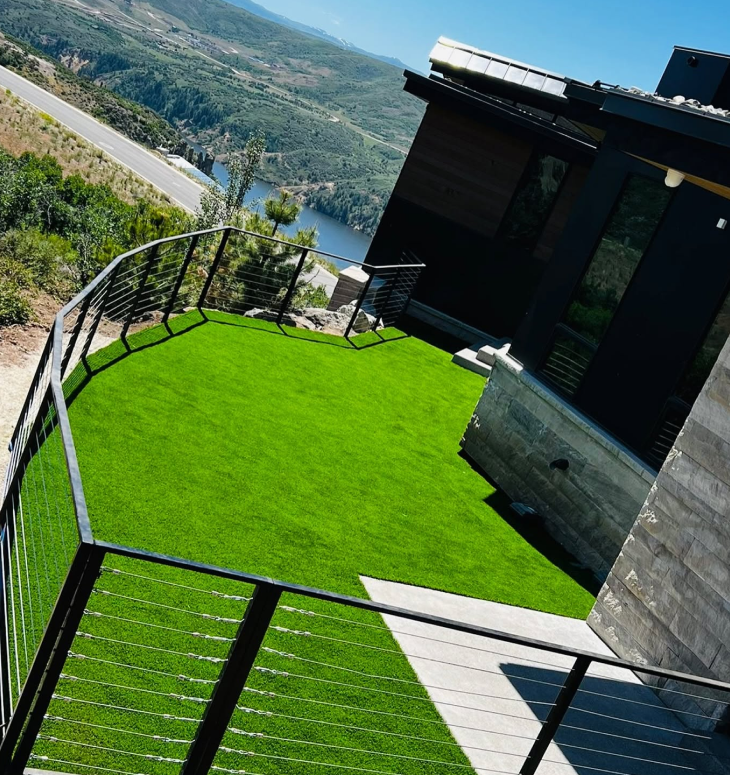
Every removal is read off the tree and the site — its lean, its health, what’s under it, and what it’s near — not run to a generic plan.
Tree Trimming and Pruning
Pruning is where trees are most often damaged by good intentions. Done right, it improves a tree’s structure, health, and longevity. Done wrong — too much at once, the wrong season, the wrong cut — it’s a mistake that stays with the tree for years.
Our crews handle structural pruning and canopy thinning, deadwood removal, and clearance pruning away from homes, driveways, and walkways. We prune to the tree’s biology and the season, not to whatever is fastest, because the cuts we make this year are the shape the tree lives with for the next decade.
How We Approach the Work
Tree work starts with reading the tree, not reaching for a saw. Every project follows the same path.
01 · The Walk-Through
A Professional Care Arborist walks the property with you and reads every tree that matters — which are healthy, which are at risk, which are worth protecting, and which have become a hazard. You come away knowing the state of the trees on your property, not just the one you called about.
02 · The Plan
We put together a clear, itemized scope and price — immediate work and a longer-term care plan, so the trees that anchor the property are looked after season after season. No upselling, and no surprises after the work starts.
03 · The Work
Our crews do the work — removal, pruning, treatment, planting — with the property protected and the site left clean. Where an HOA or an insurer needs documentation, we prepare it as part of the job.
Featured Designs
Work shaped by place.

Old Ranch Road.
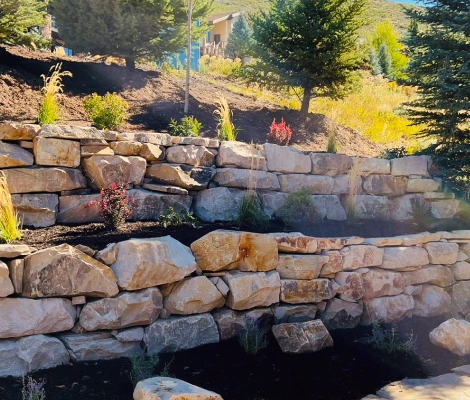
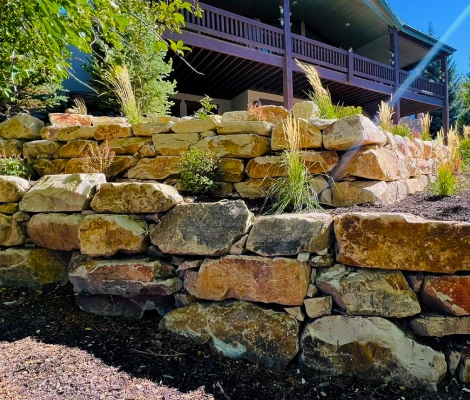
Stone terraces designed for mountain runoff and winter durability.
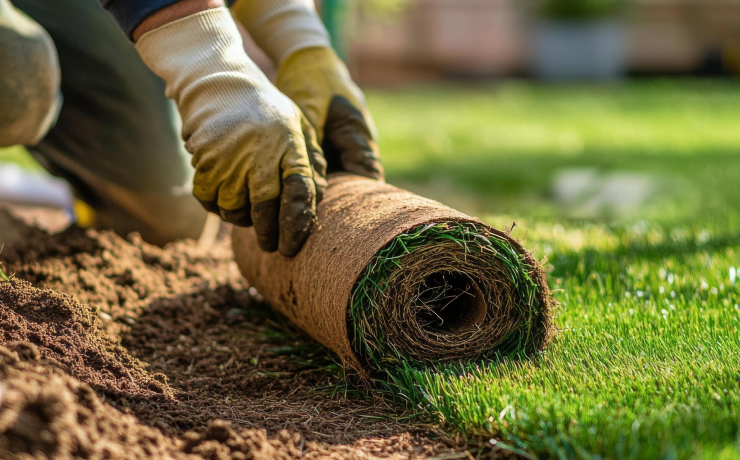
The North Bench House.
Terraced stonework shaped for steep mountain grades.
Mountain Majesty Manor.
Built for mountain winters and year-round living.
View Restoration and Fire Mitigation
Two things matter on Wasatch properties that flatland tree companies rarely handle well: the view, and the fire.
View restoration is selective, careful trimming that opens a mountain or lake view without topping or disfiguring the trees that frame it — the difference between a restored view and a row of damaged trunks. Fire mitigation and defensible space is thinning, ladder-fuel removal, and deadwood clearing that gives a home room to breathe during fire season. Both are done with the same restraint as our pruning, and both come with HOA-ready documentation when your review board requires it.
Tree Health and Assessment
A tree in decline rarely announces it early. By the time the canopy thins or the needles brown, the problem is usually well underway. Reading a tree before it fails is the most valuable thing we do.
A Professional Care Arborist assesses the trees on the property — their health, their structure, and the risks they carry — and recommends what each one actually needs. From there we handle deep-root fertilization and seasonal nutrient programs, preventative insect and pest applications, disease diagnosis, and recovery treatment for stressed or declining trees. The goal is always to keep a tree standing well, and only to remove it when keeping it isn’t the right call.
Tree Planting and Transplanting
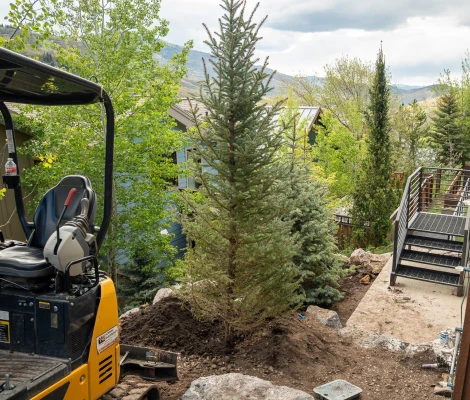
The other side of tree work is putting the right tree in the right place. We plant specimen trees for privacy, structure, and screening, and we source and transplant established trees when a property needs size sooner than a sapling can give it.
Because we design and build the landscape around them, the trees we plant are chosen for the climate, the soil, and the role they’ll play on the property — not pulled off a lot and dropped in a hole. Native and climate-appropriate species, set to survive a high-altitude season and grow into the place they’re meant to hold.
Part of the Year-Round Relationship
Trees aren’t a one-visit job. They move through a whole year — heavy snow that loads the limbs, spring growth, summer stress, fire season, the wind that finds the weak branch. That’s where the stewardship relationship matters.
The same team that removes, prunes, and treats your trees watches them across the seasons — catching the dead limb before it falls, the stressed tree before it declines, the fire fuel before the season turns. Looking after trees is reading them continuously, year after year, not waiting for one to come down.
Where We Work
Park City, Heber, Midway, Salt Lake County, Summit County, Wasatch County, and select projects across the Wasatch Front. Trees grow differently on either side of the divide — different species, different soil, different snow load, different fire exposure — and the care changes with them.
The studio is built for one region, and the crews know its trees intimately.
questions you may have
Frequently asked questions
How quickly can someone come out to look at a tree?
For non-emergency assessments, we’re typically on-site within the same week. For storm damage or a hazard tree, we prioritize same-day or next-day response across our service area — a phone call gets a faster response than the form.
Do you handle storm damage and emergencies?
Yes. Storm cleanup and hazard removal are core work for us, especially through the heavy-snow and high-wind seasons. Call (XXX) XXX-XXXX directly for anything time-sensitive.
Will trimming or pruning hurt my tree?
Not when it’s done correctly. Proper pruning improves a tree’s structure, health, and longevity. The damage comes from over-pruning, wrong-season cuts, or poor technique — exactly the things our crews are trained to avoid. A bad cut can’t be undone, which is why we prune to the tree, not to the clock.
Are you insured for work near homes and structures?
Yes, fully — general liability, workers’ comp, and equipment coverage. We’re glad to send proof of coverage before any work begins.
Do you handle HOA approval paperwork?
We do. For most Wasatch and Park City HOAs we already know what’s required, and we prepare the documentation as part of your scope. If your HOA has its own process, we’ll work with their review board directly.
What does an assessment cost?
The on-site walk-through with a Professional Care Arborist is complimentary. You’ll get a clear, itemized scope and price, with no obligation to move forward.
Start a Conversation
Caring for a tree starts with a conversation — and with a walk-through of the trees that shape your property.
We remove, prune, treat, plant, and look after the work — the trees and everything around them under one roof. The same team carries it from the first walk-through to every season that follows.